Where we answer the call.
Emergency AC Repair Service covers Birmingham's east I-20 corridor exclusively — Leeds, Moody, Pinson, Clay, and Springville. Staying inside five cities means our trucks are never more than a few miles from most calls, our technicians know the housing stock, and no job gets delegated to a subcontractor we have never met. Licensed, NATE-certified, and reachable at (205) 206-5252 — 24 hours, 365 days. Written estimate before any work begins. No call center, no quote bots.
Leeds · Moody · Pinson · Clay · Springville
East Corridor · Leeds to Springville
Trane · Carrier · Lennox · Rheem · Goodman · York · Daikin · Mitsubishi · Fujitsu · Bryant · American Standard · Amana
365 days a year
Five cities. One practice.
Select your city to see the specific failure modes we expect there, the neighborhoods we cover, and the HVAC history of that part of the corridor.
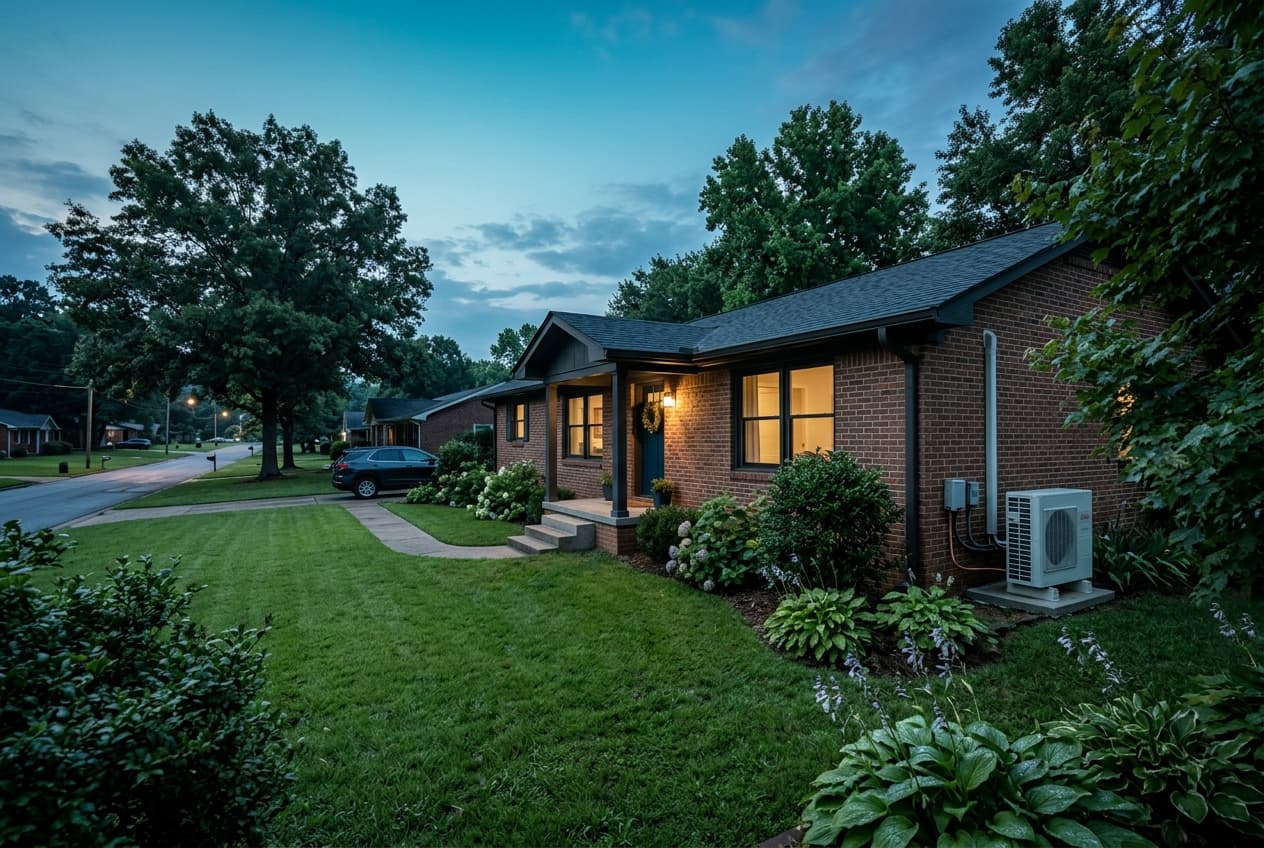
Leeds
I-20 gateway city, mix of established neighborhoods and light industrial — capacitors and refrigerant calls year-round.
See details
Moody
Fast-growing St. Clair County suburb with new construction and aging ranch stock side by side.
See details
Pinson
Wooded Jefferson County community where older homes on large lots push systems harder than the equipment expects.
See details
Clay
Mid-corridor residential corridor with a dense base of 1980s–2000s homes and high summer demand.
See details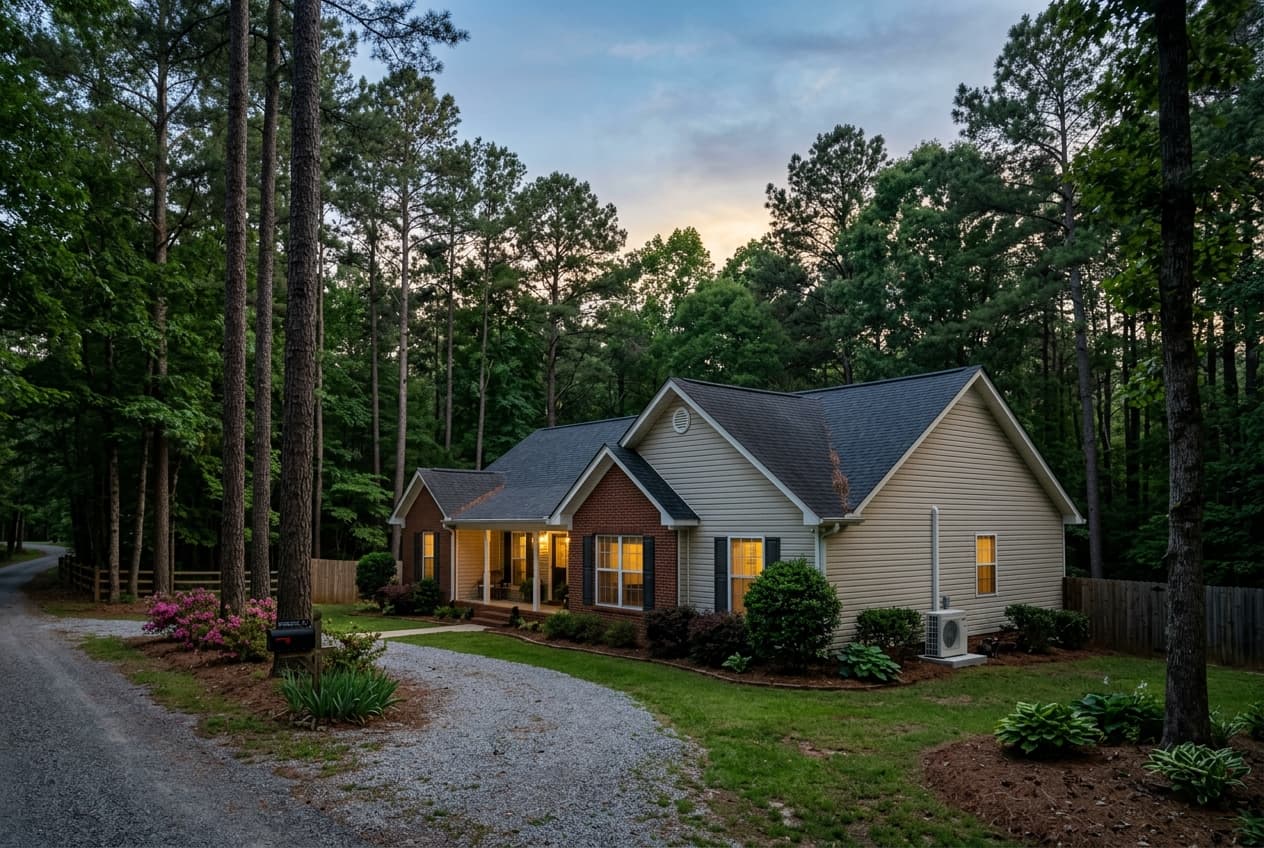
Springville
Northern anchor of our territory — rural character, longer drives, older equipment that rewards preventive work.
See detailsThe I-20 and I-59 east corridor.
Every one of our trucks is based east of the Birmingham metro. That means we are on your side of the interstate before most downtown companies have dispatched. We decline calls we can't reach quickly — no over-committing, no wasted drives.
Tap a city on the map to read its profile.
Stylized service-territory diagram. Not to geographic scale.
Why the east corridor is different.
The I-20 east corridor out of Birmingham is not a single neighborhood — it is five distinct communities strung along an interstate that doubles as both a commuter route and a light-industrial spine. Leeds anchors the western end where the freeway splits toward Atlanta, and Springville holds the rural northern reach in St. Clair County. Between them, Moody, Pinson, and Clay each carry their own housing stock, population density, and equipment age profile. A technician who knows only one of these markets will misread the others. We have worked every stretch of this corridor for six years and can tell you which neighborhoods run older refrigerant, which subdivisions are on their second capacitor cycle, and which streets always call us in July.
The mixed residential and workshop character of the corridor creates HVAC demand patterns that differ from Birmingham proper. Detached garages and metal workshops are common — especially in Pinson and rural Clay — and they need ductless mini-split systems rather than central-air extensions. Historic homes without existing ductwork are concentrated in the older sections of Leeds and Moody, where 1950s–1970s construction never included central air. Many owners in those homes are on their second or third window-unit cycle before deciding to upgrade. We install ductless systems through a single three-inch wall penetration, which is all those homes need to stop fighting the heat.
Older housing retrofits drive a specific failure profile across the corridor. Equipment installed in the 1990s and early 2000s is now reaching its twenty-year mark — the age range where capacitors, contactors, and condenser fan motors begin to fail systematically rather than one-at-a-time. Alabama heat indexes above 105°F for three months of the year accelerate every failure curve: a capacitor that would last ten years in a temperate climate lasts five to seven here. The east corridor runs those systems harder than flat-terrain Birmingham because the hilly topography traps heat in valleys and keeps nighttime temps elevated. That is the environment our trucks drive through every summer, and it is the environment our diagnostic process was built for. According to Energy.gov, central air systems have an expected service life of 15–20 years with proper maintenance — east corridor systems operating at peak Alabama summer loads typically land at the lower end of that range.
The honest answers.
Which cities do you serve?
Our primary five-city territory is Leeds, Moody, Pinson, Clay, and Springville — the I-20 and I-59 east corridor out of Birmingham. We also take calls along the Trussville border, the Center Point edge, and rural St. Clair County residential. For addresses west of I-65 or south of Hoover, we will refer you to a partner company rather than over-commit a drive that puts us behind on east-side calls.
How quickly can you reach me in an emergency?
Technicians are positioned throughout the east corridor, and we dispatch to the nearest address first. Actual time depends on your location, the hour, and how many jobs are already running. We do not publish a fixed response-time guarantee because we are not willing to make a promise we cannot keep on every single call. When you phone (205) 206-5252, we tell you honestly, on that call, roughly when to expect us.
Do you serve rural St. Clair County addresses beyond Springville?
We take calls in rural St. Clair County when the address is within a reasonable drive of Springville — typically county roads off US-11 and SR-174. Properties well east toward Ashville or Ragland are outside our reliable range. Call first and give us your address; we will tell you honestly whether we can serve you or whether a closer contractor is the better answer.
Is there a trip charge for east corridor service calls?
Diagnostic visits carry a standard diagnostic fee that is applied in full toward any authorized repair. New-system installations and ductless mini-split projects receive free on-site evaluation. We do not publish a specific fee amount online because it varies by job type — call (205) 206-5252 and we will quote it before you commit to anything.
Why do you only cover five cities instead of all of Birmingham?
The territory is small on purpose. A five-city footprint means our trucks are never more than a few miles from most calls, which means shorter waits, fresher parts, and a technician who knows the housing stock in your neighborhood. Serving all of greater Birmingham would require a dispatch center, a call-queue system, and rotating crews — the opposite of what we built. When you call, you get the same person who has worked your corridor for six years.
AC out. We answer.
Dial now and a technician picks up — or leave your name and we'll call back the moment we're off the current job.