7 Warning Signs Your AC Is About to Fail
Learn the 7 critical warning signs that your air conditioner is about to break down. Birmingham homeowners: catch these early and save on emergency repairs.
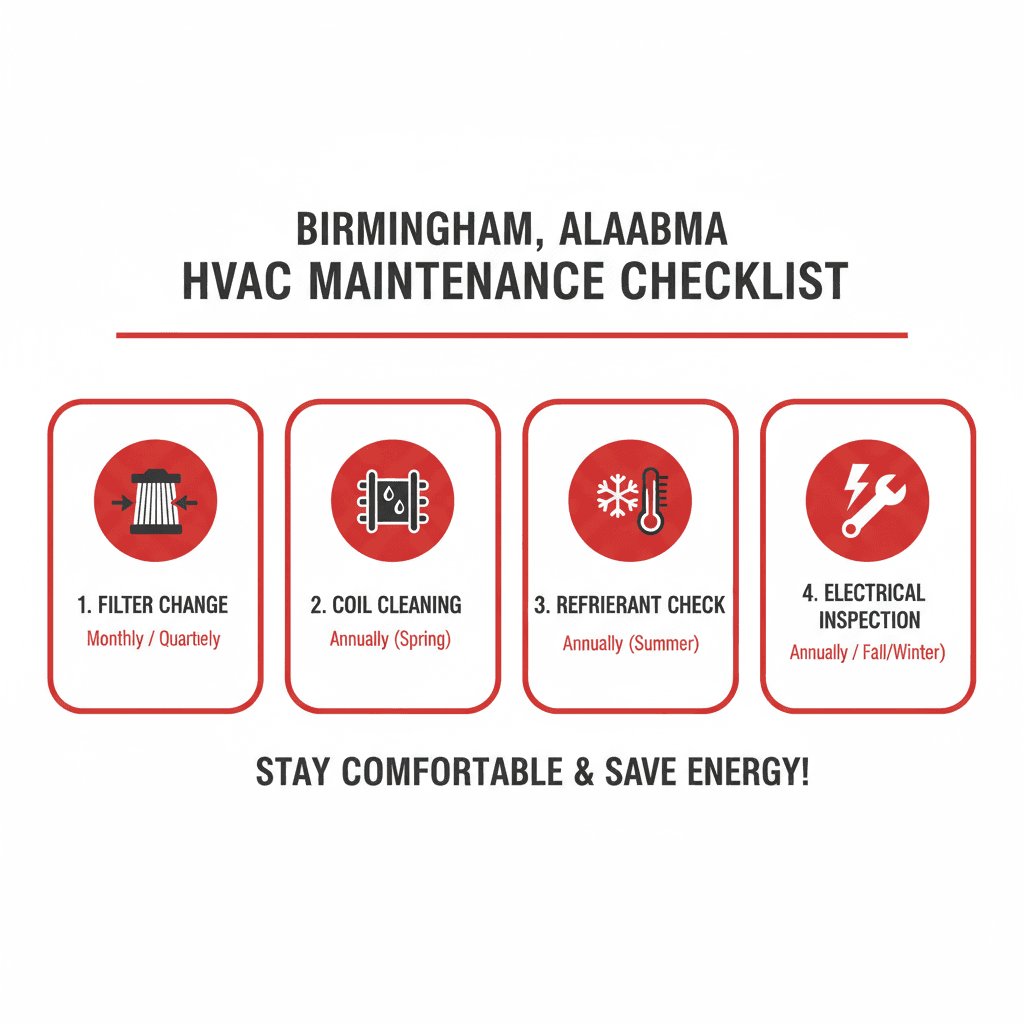
Your air conditioning system does not just stop working without warning. In our experience servicing thousands of homes across the Birmingham metro area, we have found that every AC failure is preceded by warning signs, sometimes subtle, sometimes obvious, that homeowners often overlook or dismiss. Recognizing these signs early can mean the difference between a scheduled, affordable repair and a full emergency breakdown during the worst possible time.
Birmingham's climate puts extraordinary stress on air conditioning equipment. With summer temperatures routinely exceeding 95 degrees Fahrenheit and humidity levels that make the heat index even more punishing, AC systems in our region work harder and longer than units in most other parts of the country. This accelerated wear means that the warning signs we describe in this guide should be taken even more seriously by Birmingham-area homeowners. A system that might limp along for another few months in a mild climate could fail catastrophically within weeks under the demands of an Alabama summer.
Sign 1: Your AC Is Blowing Warm or Lukewarm Air
This is often the first sign homeowners notice, and for good reason. When your AC stops producing cold air, the temperature in your home rises quickly, especially during Birmingham's intense summer months. If your system is running but the air coming from vents feels warm or only slightly cool, several issues could be at play, and each has different implications for the health of your system.
The most common cause is a refrigerant leak. Refrigerant is the chemical compound that absorbs heat from your indoor air and releases it outside. When refrigerant levels drop below the specified charge, the system cannot effectively remove heat from your home. You might notice that the air feels progressively less cool over several days or weeks before the cooling stops entirely. This gradual decline is characteristic of a slow refrigerant leak, which is one of the most common issues we see in Birmingham homes with systems over 10 years old.
Another common cause is a failing compressor. The compressor circulates refrigerant through the system, and when it begins to fail, it may still run but with reduced efficiency. You might hear the outdoor unit operating normally, but the cooling output gradually diminishes. A failing compressor is a serious condition that will eventually lead to complete system failure if not addressed.
A less serious but still important cause is a dirty or clogged evaporator coil. Over time, dust and debris that pass through the air filter accumulate on the evaporator coil, insulating it and reducing its ability to absorb heat from the air. In Birmingham's dusty and pollen-heavy environment, this accumulation happens faster than in cleaner climates. A thorough coil cleaning can often restore normal cooling performance.
What to do: If your AC is blowing warm air, check your thermostat settings first to ensure it is set to cool mode. If settings are correct, do not ignore this symptom. Call a qualified technician promptly. What might be a manageable repair today could become a much more expensive emergency if the system continues operating with an underlying problem.
Sign 2: Unusual Noises from Indoor or Outdoor Units
A healthy AC system operates with a consistent, relatively quiet hum. Any new or unusual noise is your system telling you something is wrong. Different noises indicate different problems, and understanding them can help you communicate with your technician and make better decisions about the urgency of the situation.
Grinding or metal-on-metal sounds typically indicate a failing fan motor bearing. The bearings that allow fan motors to spin smoothly wear out over time, especially in Birmingham's dusty and hot conditions. Once you hear grinding, the motor is in its final stages of life and should be replaced before it seizes completely, potentially causing damage to other components including the compressor.
Squealing or screeching sounds often indicate a worn belt in older systems or a failing blower motor in newer systems. These sounds tend to be intermittent at first, appearing during startup and disappearing as the system reaches operating temperature. As the condition worsens, the sounds become more persistent. Clicking sounds at startup are normal as relays and contactors engage, but persistent clicking may indicate a relay or contactor problem that prevents the system from completing its startup sequence.
Banging or clanking sounds suggest a loose or broken component inside the compressor. This is serious and requires immediate attention. A loose connecting rod, crankshaft, or piston inside the compressor will cause progressive damage if the system continues to operate. In many cases, the compressor will need replacement, but catching this early may prevent damage to other system components.
Buzzing from the outdoor unit can indicate a failing capacitor, loose wiring, a dying compressor, or debris interfering with the fan. Hissing sounds may indicate a refrigerant leak, which is both an efficiency problem and a potential environmental concern that requires professional repair.
What to do: Turn off your system if you hear unusual noises and call for professional service. Running an AC with mechanical problems almost always makes the damage worse and more expensive to repair.
Sign 3: Frequent Cycling — On and Off and On Again
Your AC should run in relatively consistent cycles. During the hottest part of a Birmingham summer day, it might run almost continuously, which is normal when outdoor temperatures exceed 95 degrees. But rapid cycling, turning on, running for just a few minutes, turning off, then restarting, is a clear warning sign that something is wrong with your system.
Short cycling can be caused by an oversized system that cools the air near the thermostat too quickly, then shuts off before the rest of the house reaches a comfortable temperature. However, if your system has been running normally for years and suddenly starts short cycling, the cause is more likely an electrical issue, a failing compressor, a refrigerant problem, or a safety switch that is shutting the system down to prevent damage.
Short cycling is particularly destructive because the startup phase places the most stress on the compressor. Each cycle draws a massive surge of electrical current that generates heat and mechanical stress in the compressor windings and internal components. A system that cycles 20 times per hour instead of the normal three to four times is experiencing roughly five times the wear, dramatically shortening the compressor's remaining lifespan.
What to do: Short cycling requires professional diagnosis promptly. Do not assume it will resolve itself. The underlying cause is likely getting worse with each cycle, and the compressor damage caused by frequent cycling may be irreversible.
Sign 4: Rising Energy Bills Without Explanation
If your electricity bills have increased significantly without a corresponding change in your usage patterns or utility rates, your AC system may be losing efficiency due to developing mechanical problems. This is often one of the earliest warning signs, appearing weeks or months before more obvious symptoms like warm air or unusual noises.
An AC system that is low on refrigerant, has a dirty condenser coil, a failing compressor, or restricted airflow will consume more energy to produce the same cooling effect. In Birmingham, where air conditioning can account for 50 to 60 percent of summer electricity bills, even a moderate decrease in AC efficiency can add noticeably to your monthly power bill.
Track your energy usage month-to-month and year-to-year. Alabama Power provides usage history through their online portal that makes comparison straightforward. If your July usage this year is significantly higher than July of last year with similar weather conditions and usage patterns, your AC system is likely the culprit.
What to do: Schedule a professional maintenance check. A trained technician can measure system efficiency, evaluate refrigerant charge, test electrical components, and identify the source of the increased energy consumption before it leads to a complete failure. Catching an efficiency problem early often means a simple, inexpensive fix that prevents a much costlier emergency repair down the road.
Sign 5: Moisture or Leaking Around Your System
Water or moisture around your indoor unit is never normal and should always be investigated promptly. The most common cause is a clogged condensate drain line. Your AC removes humidity from indoor air during the cooling process, and that moisture needs somewhere to go. It collects in a drain pan and flows through a PVC drain line to the outside of your home or to a household drain.
When the drain line clogs, typically with algae, mold, or debris that accumulates over time, water backs up into the drain pan and eventually overflows. Many modern systems have a safety float switch that shuts the system down when the drain pan is full, preventing water damage but also leaving you without cooling until the line is cleared.
In Birmingham's high-humidity climate, condensate drain clogs are extremely common. The moisture-rich environment promotes algae and biofilm growth inside the drain line, and the large volume of condensate produced during summer operation means blockages develop faster than in drier climates. We recommend preventive drain line treatment during spring maintenance visits to reduce the risk of summer clogs.
In more serious cases, moisture around the indoor unit could indicate a refrigerant leak causing the evaporator coil to freeze and then thaw, producing excess water that overwhelms the drain system. Or it could indicate a cracked drain pan, which is common in older systems where the pan has become brittle from years of thermal cycling.
What to do: If you notice water around your indoor unit, check for a full drain pan first. If the drain pan is overflowing, turn off the system and call for service. A clogged drain line is a relatively easy fix, but left untreated it can cause ceiling damage, mold growth, and system shutdown.
Sign 6: Weak Airflow from Vents
If the air coming from your vents feels noticeably weaker than usual, your system is telling you that something is restricting airflow. This is a symptom that often develops gradually, making it easy to dismiss. But weak airflow puts significant stress on your HVAC system and can lead to serious failures if the underlying cause is not addressed.
The simplest cause is a dirty air filter. We recommend Birmingham homeowners check their filter monthly during summer and replace it every one to three months depending on the type. A severely clogged filter restricts airflow to the point where the evaporator coil can freeze, compounding the problem and potentially causing water damage when the ice melts.
Beyond the filter, weak airflow can indicate a failing blower motor, leaking ductwork, a frozen evaporator coil, or a blocked return air path. In Birmingham's older homes, particularly in Homewood, Mountain Brook, and parts of Vestavia Hills, ductwork that has deteriorated over decades is a common culprit. Flex duct develops tears, disconnections, and compression points over time that progressively reduce airflow.
What to do: Start by checking and replacing your air filter. If airflow does not improve within a few hours, schedule a professional service call. Continuing to run the system with restricted airflow stresses every component and accelerates failure of the blower motor and compressor.
Sign 7: Bad Smells from Your Vents
Your AC system should produce neutral-smelling air. Any unusual odor coming from your vents indicates a problem that needs attention, and some odors indicate situations that require immediate action.
A musty or moldy smell indicates biological growth inside your ductwork, on the evaporator coil, or in the drain pan. Birmingham's high humidity makes mold growth in HVAC systems particularly common and particularly problematic. Beyond being unpleasant, mold in your HVAC system circulates spores throughout your home, potentially causing respiratory issues, allergic reactions, and other health problems for your family. Professional cleaning of the evaporator coil, drain pan, and ductwork is the appropriate remedy.
A burning or electrical smell is more urgent. This could indicate overheating wiring, a failing motor with damaged windings, or a burned-out component. If you smell burning, turn off your system immediately at the thermostat and the breaker panel, and call for emergency service. Continued operation could present a genuine fire risk, and this is not a situation to monitor or wait out.
A rotten egg or sulfur smell near a gas furnace could indicate a gas leak, which is a serious safety hazard. Leave the home immediately, do not operate any electrical switches or appliances, and call your gas utility's emergency line from outside the home.
What to do: Musty smells warrant a professional cleaning of your evaporator coil, drain pan, and ductwork. Burning smells require immediate system shutdown and emergency service. Gas smells require immediate evacuation and a call to the gas utility.
The Bottom Line for Birmingham Homeowners
Every one of these warning signs is your AC system asking for help. The Birmingham climate is uniquely demanding on air conditioning equipment, and the systems in our area work harder and accumulate more wear than systems in most other parts of the country. That means warning signs in our market should be taken more seriously and addressed more promptly than they might be elsewhere.
If you are experiencing any of these symptoms in your Birmingham-area home, call Emergency AC Repair Service at (205) 555-0321. Our comprehensive diagnostic evaluation will identify the root cause of the problem and give you clear options for addressing it before a manageable issue becomes an expensive emergency. We serve all of greater Birmingham including Hoover, Vestavia Hills, Homewood, Mountain Brook, Trussville, Pelham, Alabaster, and Gardendale with fast response times and transparent pricing.
Prevention is always more affordable than emergency repair. If your system seems to be running normally today, consider scheduling a preventive maintenance visit to ensure it stays that way. Our bi-annual maintenance program catches developing problems before they cause failures and keeps your system running at peak efficiency throughout the demanding Birmingham cooling season.
HVAC Maintenance Calendar
Birmingham, AL (2026)
Month-by-month HVAC care guide for Birmingham homeowners
Filter change, thermostat check
Duct inspection, CO detector test
Spring AC tune-up — SCHEDULE NOW
AC startup test, refrigerant check
Full system inspection before summer
Peak cooling — emergency repairs spike
Highest demand month in Birmingham
Check drainage, clean evaporator coil
Fall tune-up, prepare for heating
Heating system test, filter change
Furnace inspection, seal ductwork
Holiday readiness check, filter swap
Related Resources
Need Emergency AC Repair in Birmingham?
Call now for fast response. Transparent pricing. Customer Satisfaction Promise.
(205) 555-0321